Artificial Intelligence in Sugarcane Cultivation and Industry
An interdisciplinary, systematic analysis linking the theoretical foundations of AI — from analytical machine learning to generative AI — with its practical applications across the sugarcane agro-industrial ecosystem.
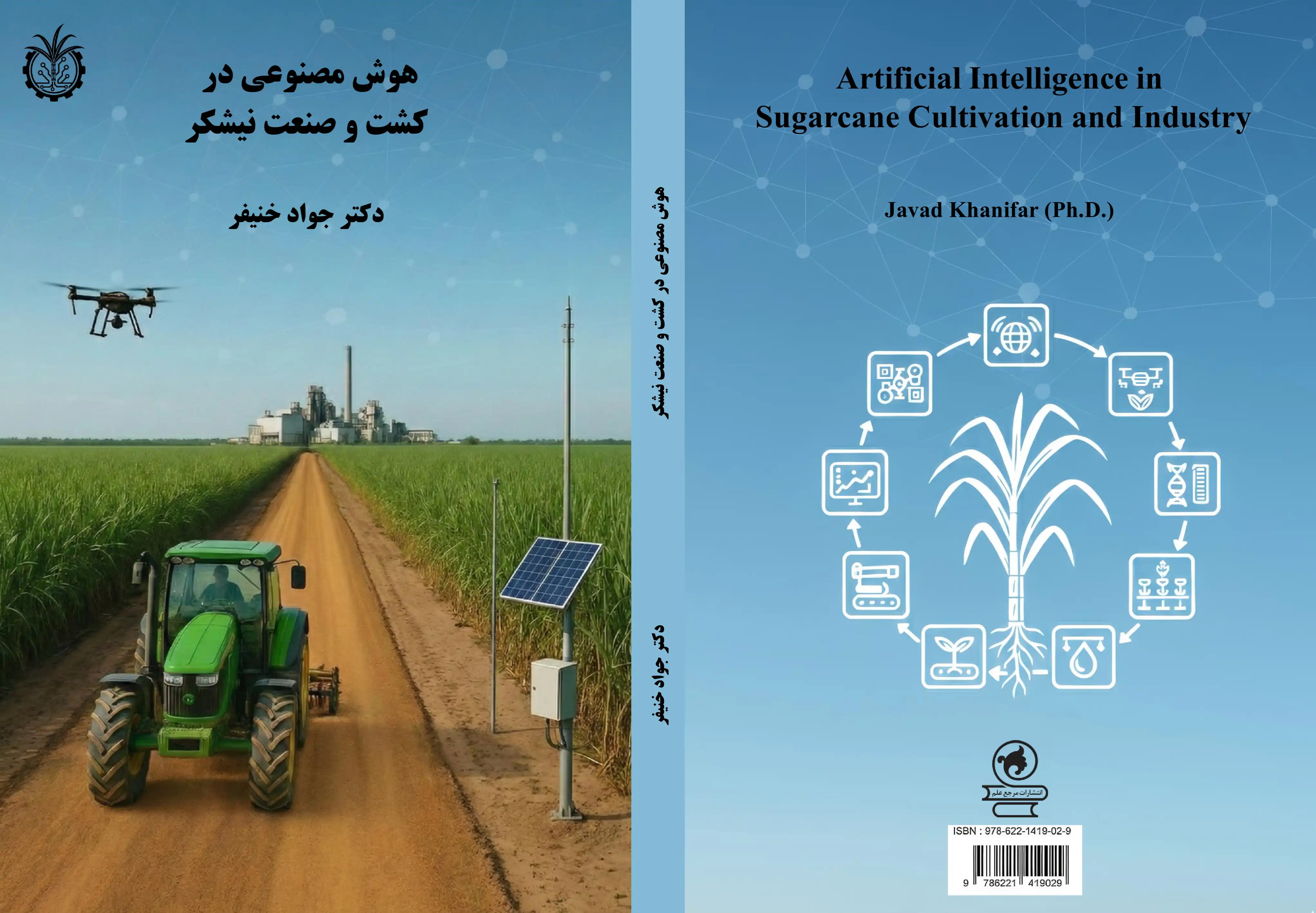
A strategic roadmap for smart, sustainable sugarcane
This book, Artificial Intelligence in Sugarcane Cultivation and Industry, presents an interdisciplinary, comprehensive, and systematic analysis that integrates the theoretical foundations of artificial intelligence (AI) with its practical applications in the sugarcane agro-industrial ecosystem.
By establishing a coherent conceptual framework, this work elucidates how modern AI paradigms — from analytical machine learning to generative AI — can address persistent challenges in the sugarcane sector and catalyze its transition toward a sustainable, intelligent, and resilient future. It is designed as an essential reference and practical guide for researchers, industry professionals, policymakers, and graduate students in agriculture, data science, and engineering.
The book is organized into four integrated chapters that guide the reader from the foundational principles of sugarcane agronomy and AI to the practical and forward-looking applications that emerge at their intersection.
Four chapters, from foundations to the frontier
Sugarcane: An Introduction to a Complex Agro-Industrial System
This chapter establishes the foundational context, presenting sugarcane not merely as a crop but as a complex biological, economic, and industrial system. It begins with an overview of sugarcane's history, origin, and genetic evolution before detailing its botanical and physiological characteristics alongside the scientific principles of its cultivation. The chapter then analyzes the global socioeconomic significance of sugarcane, mapping its value chain from farm to final products such as sugar, bioethanol, and biomass. It concludes by introducing the pivotal concept of the "sugarcane biorefinery" and examining the systemic challenges confronting the industry — including climate change, water scarcity, pests, and operational inefficiencies — thereby establishing the rationale for a transition toward technology-driven, data-centric solutions.
Fundamentals of Artificial Intelligence
Forming the theoretical backbone of the book, this chapter offers a comprehensive and systematic explanation of AI fundamentals tailored for an audience with diverse scientific backgrounds. It opens with the history, definitions, and major classifications of AI before proceeding to a detailed examination of its key subfields. The core of the chapter focuses on machine learning and deep learning, thoroughly explaining learning paradigms (supervised, unsupervised, and reinforcement learning), the model-building process, and key neural network architectures (e.g., Feedforward, Convolutional, Recurrent, and Transformer networks). Furthermore, it explores prominent application domains such as computer vision, natural language processing, and robotics, along with emerging paradigms including Generative AI, Geospatial AI (GeoAI), and the Artificial Intelligence of Things (AIoT). This chapter equips the reader with the theoretical knowledge and conceptual vocabulary required to fully comprehend the applications detailed subsequently.
Applications of Artificial Intelligence in the Sugarcane Value Chain
This chapter constitutes the practical and empirical core of the book, systematically analyzing documented AI applications across the entire sugarcane value chain. Referencing contemporary, high-impact research, it demonstrates precisely how the algorithms and architectures introduced in Chapter 2 are deployed to solve specific industry problems. Key areas of investigation include:
- Yield Prediction and Crop Monitoring — utilizing machine learning models with climatic, soil, and remote sensing data (from satellites and UAVs) for accurate yield prediction and real-time crop health monitoring.
- Pest, Disease, and Weed Management — employing deep learning and computer vision for early detection and classification of diseases, automated pest monitoring, and intelligent weed management via variable-rate application systems.
- Soil and Water Resource Optimization — applying AI for precision nutrient management, optimizing irrigation scheduling based on crop water requirements, and implementing smart irrigation systems.
- Plant Breeding and Genotype Selection — using AI-driven genomic and phenotypic data integration to accelerate genotype selection and enhance the efficiency of breeding programs.
- Smart Harvesting, Logistics, and Processing — developing intelligent harvesters, optimizing harvest schedules, managing transportation fleets to minimize post-harvest losses, and assessing raw sugarcane and juice quality at the factory.
- Bioenergy Production Optimization — enhancing bioethanol production processes and optimizing the strategic placement of biogas plants using advanced geospatial analysis (GeoAI) and optimization models.
The Potential of Generative Artificial Intelligence in the Sugarcane Industry
This forward-looking chapter explores the role of Generative AI (GenAI) in redefining the frontiers of innovation in the sugarcane industry. It clarifies the paradigmatic distinction between analytical AI (focused on prediction) and generative AI (focused on creation and design), arguing that the next leap forward will be driven by GenAI's creative capabilities. The transformative potential of this technology is explored across several domains:
- Genetic Engineering and Generative Breeding — computationally designing novel genomes to enhance resistance to biotic and abiotic stresses and simulating phenotypes from genotypes to dramatically accelerate breeding cycles and reduce extensive field trials.
- Synthetic Data and Generative Precision Agriculture — generating high-fidelity synthetic datasets to train robust deep learning models and designing dynamic agronomic plans that adapt to changing field conditions.
- Generative Digital Twins — creating dynamic virtual replicas of farms and factories that not only monitor current states but also simulate and design future scenarios to optimize system-wide performance, establishing the digital twin as a strategic tool for optimizing the entire farm-to-factory ecosystem.
- Supply Chain Optimization and the Circular Economy — applying GenAI to simulate complex logistical scenarios, identify bottlenecks, design novel bio-based products, and provide strategic recommendations to stakeholders.
- Knowledge Management and Workforce Empowerment — creating specialized intelligent assistants and personalized educational content to bridge the skills gap and accelerate technology adoption across the sector.
Why this book fills a real gap
By providing a comprehensive and integrated analysis, this book fills a significant gap in the literature between specialized AI research and applied agricultural science.
Its primary innovation lies in three areas: first, its structural comprehensiveness, guiding the reader from theory to advanced applications; second, its holistic value-chain perspective, extending beyond isolated on-farm applications; and third, its forward-looking vision for generative AI, which positions the book as a strategic roadmap for researchers and industry leaders.
Ultimately, Artificial Intelligence in Sugarcane Cultivation and Industry establishes itself as a foundational scientific resource for anyone invested in the future of smart, sustainable agriculture. It argues that the intelligent and responsible adoption of artificial intelligence is not merely an option but a strategic imperative for securing the future of the global sugarcane industry.
Full table of contents
Get the detailed chapter-by-chapter breakdown as a PDF.
The researcher behind the book

Javad Khanifar (Ph.D.)
Dr. Khanifar is an academic lecturer, researcher, and interdisciplinary specialist whose expertise spans soil science and engineering, geomorphometry, remote sensing, and artificial intelligence. His research focuses on integrating cutting-edge technologies into the geosciences and agricultural engineering.
View personal website →